


The Cost of an Election Campaign: Can We Do Better?Rethinking the way we campaign, reducing waste, and putting our values into practice.
Running for municipal office is a chance to talk with residents about our community's future, listen to their concerns, and share ideas for making Saanich an even better place to live. But it also raises a question: How much does an election campaign really need to cost, and could some of that money be better spent?
Election campaigns require time, energy, and resources. Candidates need to reach voters, communicate their priorities, and make sure people know who is running. Signs, flyers, mailouts, advertising, and campaign materials all play a role in that process. But as I have gone through this campaign, I have found myself thinking about the financial cost, the environmental footprint, and the opportunities to do things differently. I am also thankul for volunteers who have joined me on the door steps and worked on my sign team.
If we want a community that values sustainability, responsible spending, and thoughtful planning, shouldn’t those principles also guide the way we campaign?
The environmental cost of election signs
Election signs are one of the most visible parts of a municipal campaign. They appear on boulevards, along busy roads, at intersections, and throughout neighbourhoods. They help voters recognize candidates’ names, but they also carry costs beyond the campaign budget.
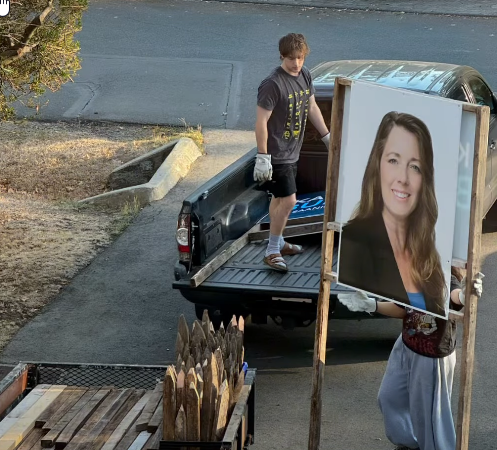
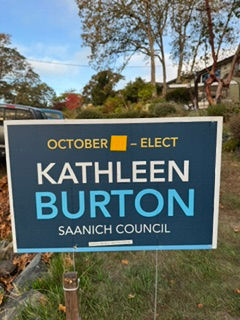
Many of my signs are 8 years old and were used in 2018, 2022, and again this year. This year, I added 5 new large signs and 100 lawn signs to replace damaged ones. My signs are made of corrugated plastic; the large ones are supported by wood, and the lawn signs have metal frames. Producing them requires resources and energy, and transporting, installing, removing, and eventually disposing of them all have an environmental impact.
Vandalism is also an issue. During this campaign, large signs throughout our community have been damaged or vandalized several times over. Replacing them costs money and consumes additional materials, creating unnecessary waste. When a sign is damaged, we lose not only the financial investment but also the resources used to manufacture it.
One simple change would be to encourage election signs to be placed only on private property, with the property owner’s permission. This motion has come before Council unsuccessfully in the past; I would like to see it, or something similar, come before Council again when your new Council is sworn in.
This would be a starting point for a conversation about reducing the number of signs throughout your community. It could mean fewer signs competing for attention along public roads, less visual clutter, fewer signs exposed to vandalism, and less material to manufacture and dispose of after election day.
Of course, any change would need to respect applicable election rules and ensure that candidates have fair opportunities to reach voters. But it is worth asking whether the number of signs you see today is necessary to achieve that goal.
Reuse what we have, rather than start from scratch
I have tried to put these principles into practice in my own campaign.
I reused my election signs, including their frames, from a previous campaign, except for five new signs needed over time to replace damaged ones. For those replacements, I used reclaimed wood. Even my T-shirt is from 2018!!

Reusing signs and frames avoids manufacturing an entirely new set of campaign materials. Using reclaimed wood for replacements gives existing materials a second life instead of relying on newly sourced timber.
There is room for improvement across the campaign industry, too. Candidates could be encouraged to design signs for multiple election cycles, use durable and repairable frames, and choose materials that can be reused or responsibly recycled. Campaign teams could also coordinate sign collection and storage so they don't discard reusable materials after election day.
A campaign sign shouldn't automatically become waste just because an election is over.

Do we really need glossy flyers?
Printed campaign materials are another area where small decisions can make a difference.
High-gloss flyers printed on heavy cardstock can look polished, but they also tend to use more material than a simple paper flyer. Depending on the coatings, inks, and local recycling facilities, glossy or laminated materials may be more difficult to recycle.
This year, I decided to take a different approach. Instead of printing expensive, high-gloss flyers on cardstock, I printed a simple flyer on recycled paper.
I also switched from colour printing to black and white to cut costs further.
The result was a simpler, less expensive way to communicate the information voters needed. It may not have had the same glossy finish as some campaign materials, but it served its purpose without requiring the same investment in presentation.

For me, this reminded me that effective communication doesn't have to be expensive to produce. Voters deserve clear information about candidates’ priorities, experience, and ideas. That information doesn't need to arrive on premium paper or in full colour.
If we can communicate effectively while using fewer resources, why wouldn’t we?
Where else could campaigns save money and reduce waste?
Municipal campaigns could consider several other practical changes.
1. Make digital communication the first choice.
My campaign focused on a Canadian campaign website, email, social media, and joining a local online community, as well as attending all candidates' meetings and coffee chats.

I had intended to regularly blog as well, but COVID had other plans, so for me, blogs are part of the final push.

I believe these ideas can still provide detailed information without requiring large print runs. Printed materials will still matter for people who don't use digital platforms, so the goal should be to offer accessible alternatives rather than eliminate paper altogether.
2. Print only what is needed.
Smaller, targeted print runs could reduce unused flyers and mailouts left over at the end of a campaign, or that residents line their bird cages with. Candidates could also avoid repeated mailings that communicate substantially the same information.
3. Design materials for reuse.
Signs, frames, banners, display boards, and event materials could be designed to last through several elections. Where possible, replaceable name panels or modular designs could allow candidates to update information without replacing the entire sign. I put a piece of tape over the 2018 election date on my signs, and the new ones aren't date-specific.
4. Share resources where appropriate.
Some people frown on this, but I will include it because candidates and campaign teams could explore sharing event spaces, reusable display equipment, or other non-partisan resources. Any shared arrangements would need to respect campaign finance rules, independence between campaigns, and fairness for candidates.
5. Reduce unnecessary travel.
Campaigning involves a great deal of moving around the municipality. Organizing canvassing routes by neighbourhood, coordinating volunteer shifts, and using virtual meetings when appropriate could reduce travel time, fuel costs, and emissions.

6. Choose lower-impact promotional items, or better yet, skip them altogether.
Branded merchandise can be expensive and often has a short useful life. Before ordering items such as plastic giveaways, candidates could ask whether they genuinely help voters understand the campaign. Often, a meaningful conversation is worth more than another promotional object.
7. Plan for the end of the campaign from the beginning.
Every campaign should have a clear plan for collecting signs, repairing reusable materials, sorting recyclable items, and responsibly disposing of anything that cannot be reused. Where recycling programs accept certain sign materials, candidates should confirm the requirements before printing so they don't discover after election day that the materials have limited recycling options.
8. Be transparent about spending and material choices.
Campaigns could voluntarily share information about their spending priorities, how much material they printed, what they reused, and how they managed waste. This would help candidates learn from one another and give residents a better understanding of the choices behind a campaign.
None of these ideas alone will transform an election. Together, however, they could help make municipal campaigns more affordable, less wasteful, and more consistent with the environmental values many of us want to uphold.
Could those dollars be better spent?
Campaign spending is not inherently wasteful. Candidates need ways to communicate, and election campaigns are an important part of our democratic process. It also matters that residents can learn about their choices and make informed decisions.

But it is reasonable to ask whether every dollar spent on a campaign delivers meaningful value.
Could some of the money spent on glossy printing be used to improve accessibility or provide information in different formats? Could fewer replacement signs free up more money for voter outreach? Could a campaign achieve the same reach through thoughtful conversations, community events, and well maintained online information rather than larger sign or marketing budgets?
These are not just questions about saving money. They are questions about priorities.
Municipal campaigns often focus on practical issues: responsible spending, environmental stewardship, affordability, and planning for the future. We should
apply those same standards to our own activities.
I also recognize that candidates have different budgets and circumstances. Some rely heavily on volunteers and personal contributions, while others may have access to more campaign resources. Changes should not create additional barriers for people who want to participate in local democracy. In fact, reducing the pressure to spend large amounts on signs, printing, and promotional materials could help make running for municipal office more accessible.
Leading by example
I don't pretend my campaign has eliminated its environmental footprint. Any campaign that prints materials, travels around the community, or uses manufactured products will have an impact. I firmly believe there is always more we can learn and improve.
I have tried to make deliberate choices: reuse my signs and frames, use reclaimed wood for replacements, print on recycled paper, and switch from colour to black and white to reduce costs.
These are modest steps, but they reflect a principle I believe in: we should look for practical ways to do better rather than assume that the way things have always been done is the only way forward.
Future municipal campaigns could work together to set shared guidelines for reducing waste, reusing materials, minimizing unnecessary printing, and responsibly managing signs after election day. Candidates could still communicate their messages, compete on their ideas, and reach voters while using money and resources more thoughtfully.
A better way to campaign
At its heart, the Saanich municipal election should be about ideas, relationships, and the community's future. I believe it should be about listening to residents, understanding your priorities, and explaining how I hope to serve you.

It should not be a competition to see who can put up the most signs, print the glossiest flyers, or spend the most money getting noticed.
As I think about Saanich's future, I believe we should also consider how we conduct ourselves along the way. Responsible spending and environmental stewardship aren't just promises we make once elected. They are values we can demonstrate through our daily choices.
We can run effective campaigns while spending less, wasting less, and doing more with what we already have.
I would welcome a broader community conversation about how we can make municipal election campaigns more affordable, accessible, and environmentally responsible.
What changes would you like to see? Should we rethink the number and placement of election signs? Could simpler printed materials and more reusable campaign resources become the norm?
I’d love to hear your thoughts. After all, building a better community starts with asking how we can do things better, and that includes the way you choose your leaders.
On October 17th, I would be honoured to receive your vote.
Always Learning,
Kathleen


Comments